
On top of my first analysis, here's an alternative clip of 'the sublime' on YouTube:
Honestly, I struggled over choosing this clip or Vega's performance to really focus on in my first analysis. I think they both are profoundly sublime, though I finally admitted that Vega's performance simply exhibited more literal features of Longinus' sublime. But this clip has something of a postmodern, ironic essence, which I adore.
This clip, appropriately titled "Doll Face," meets the universality of the sublime by showing us a tragic story of a fatal 'mistaken identity' of sorts, and then immediately putting ourselves into 'Doll Face's' shoes. Doll Face is led to self destruction through the source of media - the television, and at the end of the clip the screen pans out to find that we have been watching Doll Face's demise on our own 'television.' Not only do we emotionally connect with Face's aspirations to be beautiful, but we realize that we are 'Doll Face' by simply watching Doll Face. This is a universal message about the human experience - we are all behind the 'television screen' of human experience. Even those who are trying to help us, such as through Doll Face's example, we still see them through a filter of someone else eyes. This is universal, and thus strikes us with the sublime.
Showing posts with label longinus. Show all posts
Showing posts with label longinus. Show all posts
Saturday, February 6, 2010

Monday, February 1, 2010
First Analysis: Finding 'The Sublime' on YouTube
A classical literary theorist, Longinus, in On The Sublime, formulated an idea of 'the sublime' in literature. This 'sublime' is still discussed today with considerable mystery. I have always had difficulty understanding the sublime because of this mystery of it - nobody seems to be able to concisely describe it beyond vague words such as "amazement," and "wonderment." Perhaps this mystery is simply part of the essence of this 'sublime.' At any rate, that is how Longinus formulated his 'sublime' - with plentiful mystery.
Longinus' sublime is an "excellence of discourse" (Murray 114) that amazes all audiences at all times. It not only "persuades or gratifies" (Murray 114), but the wonder of the work tells us something more, something deeper. It's quite a wild definition, and is mostly developed as a prototypical definition - it is developed through example, and not direct description.
To find a clip on YouTube that fits Longinus' sublime might seem a serious feat, but, remarkably, there is plenty to work with. And why shouldn't there be - people are wonders themselves, and YouTube is an intersection of many.
Above is musician Suzanne Vega performing her song, "The Queen and the Soldier," live. This is a prime example of the sublime. In this performance Vega becomes two different people, literally and metaphorically. Literally, Vega is both highly talented guitarist and vocalist. And metaphorically in the lyrics, Vega is both queen and soldier. This touches upon what Longinus means to 'amaze all audiences at all times.' It is a diverse performance, where one single woman discusses major perspectives that occur all over Earth today and in the past - ruler and citizen. Almost anyone can put themselves into one of the two categories, ruler or citizen. Not only are these perspectives discussed, but they are discussed with such grace that both are equally humanized, or equally realistic. The audience can see, and feel for, the conflicting reasoning behind both queen and soldier, all while enjoying a touching tune. The appeal of the performance is thus almost universal - everyone has something to embrace about it. It is a humanizing depiction of both ruler and citizen, and simply may be enjoyed for the musical aesthetic.
Shakespeare was very well known for having realistic characters that learn and grow as a literary work progresses. It is usually this reason that Shakespeare is cited as being one of the greatest writers of history. His works are said to be "universal" in the sense that they appeal to a huge audience. This is a parallel to Vega's "The Queen and the Soldier," and seems to be at the heart of the 'sublime.' After all, it's hard to argue with Shakespeare's success.
Not only does Vega meet the strictest definition of 'the sublime' here, but also her performance represents smaller details of Longinus' formulation of the sublime. Vega's performance clearly is a new song based on historic folk songs. This is exactly one way that Longinus said writers may reach the sublime - imitation (Murray 131). Folk songs became historic because of their popularity in the past, likely for their use of the sublime. In other words, they are a proven method to reach the sublime. By imitating historic folk songs Vega reaches the sublime through Longinus' methodology.
Briefly summing up other ways that Vega meets Longinus' sublime: Vega's performance uses elaborate language - there is strong choice of words, and rhyme is peppered throughout; inspired emotion is well present - what could be more emotionally profound than a dialogue between a royal queen and a menial soldier; and the imagery makes a strong impression - much of the story is descriptive, yet energized (Murray 121).
Above all, Vega gives a beautiful performance in all ways. It's hard not to be struck by wonder - this 'sublime.'
Works Cited_
Longinus. On The Sublime. Translated by Penelope Murray and T. S. Dorsch. Classical Literary Criticism.
Longinus' sublime is an "excellence of discourse" (Murray 114) that amazes all audiences at all times. It not only "persuades or gratifies" (Murray 114), but the wonder of the work tells us something more, something deeper. It's quite a wild definition, and is mostly developed as a prototypical definition - it is developed through example, and not direct description.
To find a clip on YouTube that fits Longinus' sublime might seem a serious feat, but, remarkably, there is plenty to work with. And why shouldn't there be - people are wonders themselves, and YouTube is an intersection of many.
Above is musician Suzanne Vega performing her song, "The Queen and the Soldier," live. This is a prime example of the sublime. In this performance Vega becomes two different people, literally and metaphorically. Literally, Vega is both highly talented guitarist and vocalist. And metaphorically in the lyrics, Vega is both queen and soldier. This touches upon what Longinus means to 'amaze all audiences at all times.' It is a diverse performance, where one single woman discusses major perspectives that occur all over Earth today and in the past - ruler and citizen. Almost anyone can put themselves into one of the two categories, ruler or citizen. Not only are these perspectives discussed, but they are discussed with such grace that both are equally humanized, or equally realistic. The audience can see, and feel for, the conflicting reasoning behind both queen and soldier, all while enjoying a touching tune. The appeal of the performance is thus almost universal - everyone has something to embrace about it. It is a humanizing depiction of both ruler and citizen, and simply may be enjoyed for the musical aesthetic.
Shakespeare was very well known for having realistic characters that learn and grow as a literary work progresses. It is usually this reason that Shakespeare is cited as being one of the greatest writers of history. His works are said to be "universal" in the sense that they appeal to a huge audience. This is a parallel to Vega's "The Queen and the Soldier," and seems to be at the heart of the 'sublime.' After all, it's hard to argue with Shakespeare's success.
Not only does Vega meet the strictest definition of 'the sublime' here, but also her performance represents smaller details of Longinus' formulation of the sublime. Vega's performance clearly is a new song based on historic folk songs. This is exactly one way that Longinus said writers may reach the sublime - imitation (Murray 131). Folk songs became historic because of their popularity in the past, likely for their use of the sublime. In other words, they are a proven method to reach the sublime. By imitating historic folk songs Vega reaches the sublime through Longinus' methodology.
Briefly summing up other ways that Vega meets Longinus' sublime: Vega's performance uses elaborate language - there is strong choice of words, and rhyme is peppered throughout; inspired emotion is well present - what could be more emotionally profound than a dialogue between a royal queen and a menial soldier; and the imagery makes a strong impression - much of the story is descriptive, yet energized (Murray 121).
Above all, Vega gives a beautiful performance in all ways. It's hard not to be struck by wonder - this 'sublime.'
Works Cited_
Longinus. On The Sublime. Translated by Penelope Murray and T. S. Dorsch. Classical Literary Criticism.
Tuesday, January 26, 2010
Weekly Reflection: Week 1, Importance in Literature
What is most important in a work of literature? This question was the focus of discussion last class. It is important first to recognize the absurdity of this question. It is akin to asking, 'What is most important in a painting?' Take Monet's The Stroll, for example. Where do you even begin? - The sky? The grass? The figures? I can't say. The loftiness of the question makes it as massive a question as, 'What is most important in life?' For, how can we know exactly what is important in literature if we can't even say what is important in all of life? Importance is something of a hierarchy in this respect, in that the importance of a greater idea may encompass the importance of a lesser idea. For example, if happiness is most important in life, then happiness should be most important in literature. And, if achievement is most important in life, then achievement should be most important in literature. I can see no way around this.
Murray seems to agree with me in the book Classical Literary Criticism, where on the first page she puts this quote by T. S. Eliot: "Our criticism from age to age will reflect the things that the age demands" (Murray vii). The accounts of classical literary criticism that follow make that quote seem a prophecy. In Plato's Ion, the importance is the way the audience understands a work - Ion understands Homer through divine intervention, not through any skill of understanding Homer's literature. In Plato's Republic, the importance is the utility of a work for society - literature should not put bad ideas into impressionable young minds, only good ideas, even if the bad are true; literature should not discourage fighters from defending their country by causing a fear of death; literature should not show the gods in demeaning light. For Aristotle in Poetics, the importance is in the distinction of construction in literature, such as the distinction between epic and tragedy. For Longinus in On the Sublime, the importance is on the audiences feelings about a work.
The multitude of views on importance in literature in the classical world shows an immense lack of consensus. Topics vary from construction to feelings to social utility. This makes for an endless list of topics that could come up. Then, is the initial question, "What is most important in a work of literature?," hopeless? Not quite. It's just that the literal answer is relative to the audience - it changes based on what else we consider important. In this, all of the topics discussed in the classical world seem equally important.
Works Cited_
Murray, Penelope. Introduction. From Penelope Murray and T. S. Dorsch. Classical Literary Criticism.
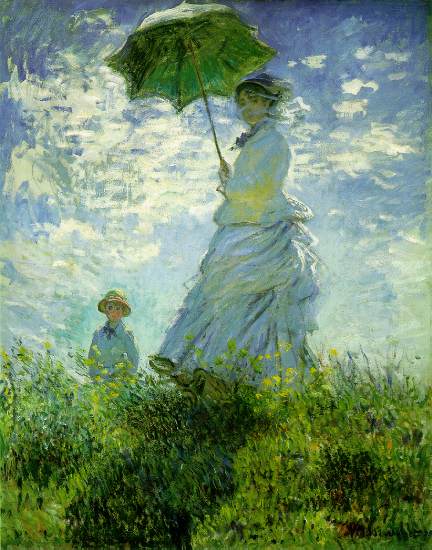 Where do you even begin? - The sky? The grass? The figures? I can't say. The loftiness of the question makes it as massive a question as, 'What is most important in life?' For, how can we know exactly what is important in literature if we can't even say what is important in all of life? Importance is something of a hierarchy in this respect, in that the importance of a greater idea may encompass the importance of a lesser idea. For example, if happiness is most important in life, then happiness should be most important in literature. And, if achievement is most important in life, then achievement should be most important in literature. I can see no way around this.
Murray seems to agree with me in the book Classical Literary Criticism, where on the first page she puts this quote by T. S. Eliot: "Our criticism from age to age will reflect the things that the age demands" (Murray vii). The accounts of classical literary criticism that follow make that quote seem a prophecy. In Plato's Ion, the importance is the way the audience understands a work - Ion understands Homer through divine intervention, not through any skill of understanding Homer's literature. In Plato's Republic, the importance is the utility of a work for society - literature should not put bad ideas into impressionable young minds, only good ideas, even if the bad are true; literature should not discourage fighters from defending their country by causing a fear of death; literature should not show the gods in demeaning light. For Aristotle in Poetics, the importance is in the distinction of construction in literature, such as the distinction between epic and tragedy. For Longinus in On the Sublime, the importance is on the audiences feelings about a work.
The multitude of views on importance in literature in the classical world shows an immense lack of consensus. Topics vary from construction to feelings to social utility. This makes for an endless list of topics that could come up. Then, is the initial question, "What is most important in a work of literature?," hopeless? Not quite. It's just that the literal answer is relative to the audience - it changes based on what else we consider important. In this, all of the topics discussed in the classical world seem equally important.
Works Cited_
Murray, Penelope. Introduction. From Penelope Murray and T. S. Dorsch. Classical Literary Criticism.
Subscribe to:
Posts (Atom)

